
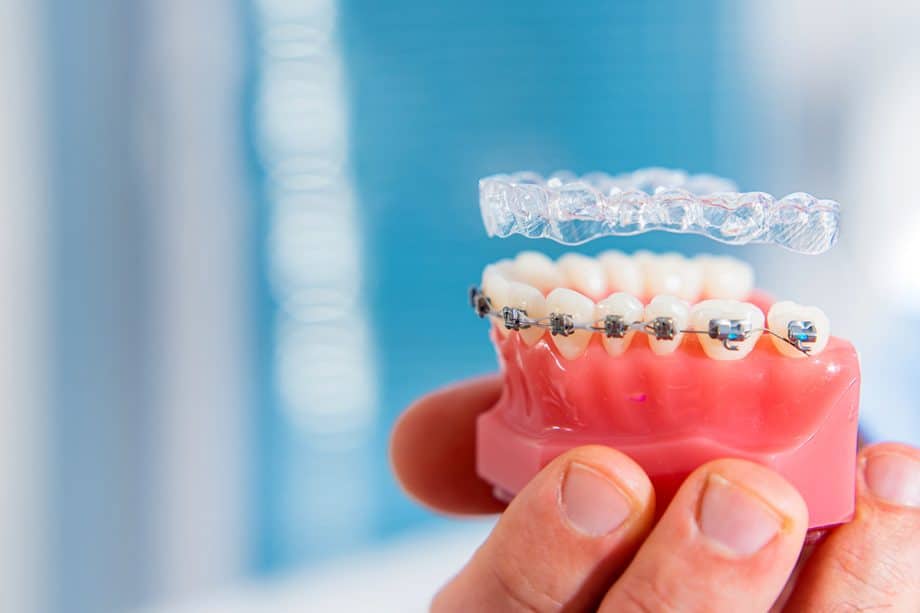
Wearing braces isn’t always easy. Comfort, dietary restrictions, and appearance are three of the top reasons our patients ask about switching to Invisalign®. While many patients can switch orthodontic treatment options without losing progress, others may have more challenging cases.
In this blog, we’ll explain who is eligible to switch from braces to Invisalign and how the process works, and answer our patients’ most frequently asked questions.
Why Switch From Braces to Invisalign?
Today, standard braces are one of the most effective orthodontic treatments available. They can correct a broad range of alignment issues, as well as complex cases involving malocclusion and jaw development. However, many patients find that braces are not necessarily convenient. They require careful oral hygiene, such as brushing multiple times a day, using special flossing tools, and avoiding many tasty treats.
If you or your teen has reached the end of your patience with regular braces, you may want to know whether you can switch to Invisalign. This advanced treatment has the following advantages over braces:
- Comfort: Made of smooth, medical-grade plastic, clear aligners have no brackets or wires.
- Discretion: With Invisalign, your orthodontic treatment stays private unless you want to share. Patients of all ages may feel self-conscious with traditional braces and draw unwanted attention.
- Convenience: Caring for Invisalign day to day is considerably easier than dealing with braces. Removing the aligners to brush and floss makes oral hygiene less complex. In addition, patients with braces need more frequent orthodontic checkups during treatment.
- No Food Restrictions: With Invisalign, your aligners come out at mealtime and when drinking anything other than cool water. You can eat anything you like as long as you take proper care of your teeth and your aligners, and remember to replace them in your mouth.
Better Oral Health Outcomes: Researchers find that Invisalign patients have better gum health after treatment than those with braces because they can take better care of their teeth.
Who is Eligible to Switch Treatments
While Invisalign has many upsides, not every orthodontic patient is eligible to switch from braces. Some orthodontic issues are too complex for Invisalign to correct alone. For example, orthodontists use braces to help correct severe bite differences (overbite, underbite, crossbite, or open bite) or changes in jaw alignment.
We will also take your lifestyle and habits into consideration before recommending the switch. Braces patients need not remove and replace their appliances at every meal since they are cemented to the teeth. Parents do not need to worry that their teen will continually lose aligners or forget to replace them, leading to treatment delays and possible relapse.
While all orthodontic patients in their teens and older need discipline to make their treatment successful, Invisalign users need to commit to wearing their appliances 20 to 22 hours per day. They must take particular care of their aligners and keep their teeth clean. If you feel that you or your teen can easily meet these requirements, we may accept your request to switch treatments.
When The Switch to Invisalign is Most Effective
If you plan to replace your braces with Invisalign, timing is everything. Most practitioners recommend changing at the midpoint of your treatment, when many of the large corrections have taken place, and the alignment needs fine-tuning.
Enjoying a Beautiful, Well-Aligned Smile With Invisalign
No matter which orthodontic path you choose, you will love your new smile. If you’re ready for a discreet, convenient, comfortable treatment, ask us whether you are eligible to switch to Invisalign.
Frequently Asked Questions About Invisalign
What type of corrections can Invisalign make?
Invisalign can correct gapped, crowded, or crooked teeth, as well as mild to moderate bite differences. Braces are a more versatile treatment option when considering more severe alignment issues.
How long does Invisalign treatment take to complete?
On average, Invisalign takes about 12 to 18 months, roughly the same as standard braces, depending on the complexity of your alignment issues.
What are the aligners made of?
Invisalign trays are made of clear, medical-grade plastic that is resistant to warping and staining.
How do I clean my aligners?
Use clear, liquid antibacterial soap without dyes or perfumes, and an extra-soft toothbrush. Avoid abrasive whitening toothpastes, denture tablets, and firm toothbrushes, as they can etch the plastic and cause a cloudy appearance. Invisalign’s branded cleaning crystals are convenient and safe. Do not use hot water as it will warp the aligners.
How much does Invisalign cost?
The cost of Invisalign is roughly the same as that of braces, but varies across the country. We can create a custom treatment plan to inform you of the expected financial commitment.
At Hass Family Orthodontics, we offer both standard braces and Invisalign in a family-friendly practice. We want to help you understand which treatment option best fits your lifestyle and your orthodontic needs. Contact us today to schedule your consultation!