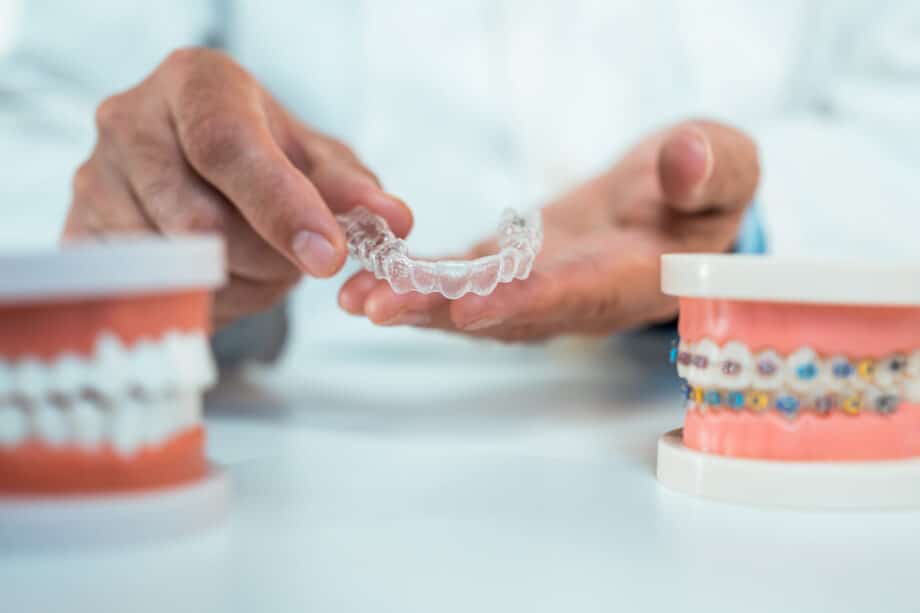
Both braces and Invisalign® create even, beautiful smiles. Many of our patients ask us to compare these two orthodontic systems to make the best choice for themselves or their loved ones.
This blog compares three vital aspects of orthodontic treatment regarding braces and Invisalign. We will examine the cost of each system, whether the appliances are comfortable to wear, and address how conveniently they fit into your daily life.
Cost
The cost of orthodontic treatment varies, but braces and Invisalign are approximately the same price in most metropolitan areas in the United States. Invisalign may be slightly more expensive than traditional braces, especially in complex cases.
Depending on your dental insurance policy, braces and Invisalign may be partially covered, lowering your out-of-pocket costs.
Comfort
Most orthodontic patients report that Invisalign has an edge over braces in terms of comfort. Braces have bands, brackets, and wires that can irritate sensitive oral tissues, especially as you become accustomed to wearing them. Adjustments can be slightly uncomfortable. However, most patients easily adapt to wearing braces, and sensitivity eases over time.
Convenience
Understanding how orthodontic treatment fits into your daily activities is essential when comparing these systems. When we explain braces and Invisalign to our patients, we compare the convenience of each treatment across several categories.
Daily Wear Routines
Excellent oral hygiene is important during orthodontic treatment. Keeping braces clean requires thoroughness and patience. You will need specialized equipment, such as floss threaders and interdental brushes. Brushing your teeth after every meal and snack is ideal.
However, cleaning and caring for clear aligners can take approximately the same amount of time each day. You will need to clean the aligners with branded crystals or clear antibacterial soap, avoiding all products with added dyes and fragrances.
Dietary Considerations
One area where Invisalign holds an advantage is in your diet. Since clear aligners come out for eating and drinking, you can have anything you want within reason as long as you brush and floss.
Braces come with food restrictions, eliminating foods like popcorn, whole apples, and sticky candy.
24-Hour Wear Vs. Removability
Invisalign can come out for eating and drinking, but you must wear the aligners during sleep. Our guideline is to wear the aligners for 20 to 22 hours daily.
One disadvantage of clear aligners is that patients sometimes lose or damage them when they are not in place. With braces, you have constant, reliable treatment. Teens may lose their aligners more often or forget to put them back in, resulting in treatment delays.
Frequency of Office Visits
With braces, you will see us every 4 to 6 weeks. Invisalign requires fewer office visits.
Frequently Asked Questions About Braces
How long do braces take to work?
On average, braces take 12 to 36 months, depending on the complexity of your case. A simple correction, like slightly crooked teeth or a small gap, may not take as long.
What do I do if my braces break?
Call us immediately for a repair. In the meantime, use orthodontic wax to cover any wires or brackets that cause discomfort.
Hass Family Orthodontics provides many treatment options to patients of all ages. If you want to know more or schedule a consultation, please get in touch with us today.